2026-7-27
(Courtesy of Taiwan Panorama Jane 2026)
Chen Chun-fang /photo byby Jimmy Lin
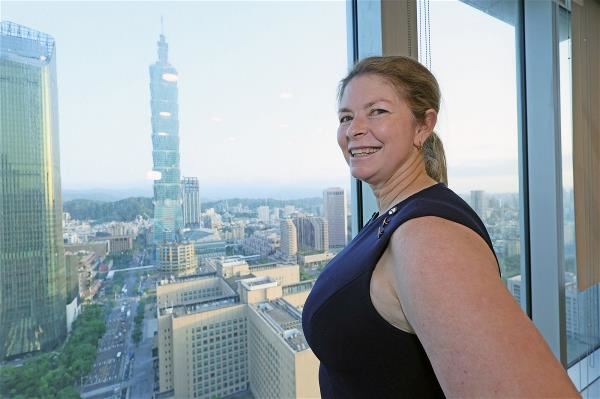
In the afternoon at the Australian Office Taipei, Melanie Harris greets us with an easy, warm smile. Harris is Head of Indigenous Engagement and Export at the Australian Trade and Investment Commission (Austrade). A trailblazer, she was Australia’s first female Indigenous Trade Commissioner and previously posted to Malaysia. In recent years, she has focused on supporting First Nations Australian businesses to expand into international markets.
On her first visit to Taiwan this summer, Harris followed a packed itinerary that included an Amis traditional winery, the Kavulungan Austronesian Cultural Exchange Park, the Council of Indigenous Peoples, and Taiwan Indigenous Television. Before returning home, she spoke exclusively with Taiwan Panorama, sharing a broad cross-cultural perspective on how the deep roots of traditional Indigenous culture can be leveraged as a competitive advantage in global markets. Her visit also opened new avenues for exchanges between the Indigenous peoples of Taiwan and Australia, creating opportunities for both sides to better understand one another.

A sense of belonging, like coming home
Speaking of her recent visit to Taiwan, Harris’s eyes light up with excitement. “I have felt very at home here in Taiwan, and I think my experiences with Indigenous communities in Taitung and Hualien just cemented that sort of welcoming and at-home feeling I’ve had since I first landed,” she said. “I didn’t feel like I’d come to a foreign country at all - it felt very familiar, even though I’d never been here before. I’ve just loved it.”
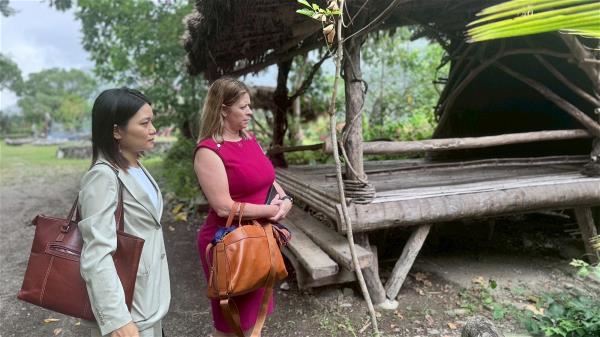
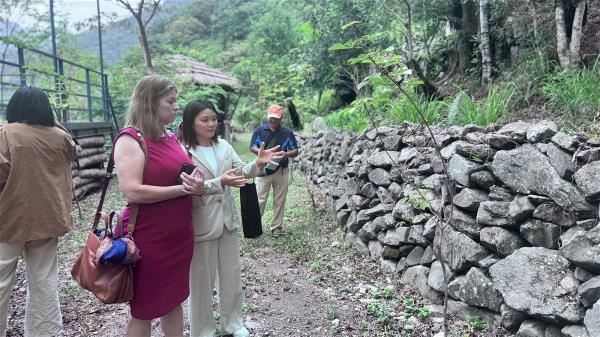
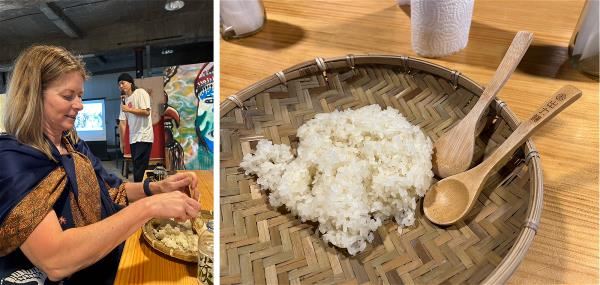
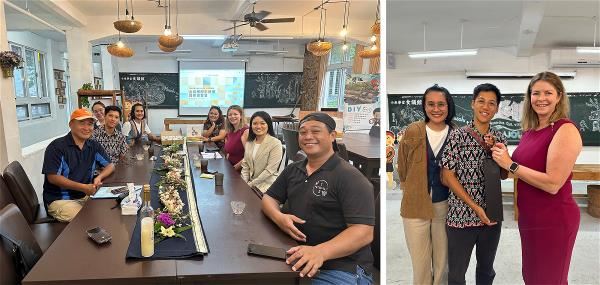
During her time in Taitung, Harris, herself a First Nations Australian, joined members of the Amis community in making traditional rice wine. The experience deepened her appreciation of the drink’s cultural significance as a link between people, community, and ancestors. At the Kavulungan Austronesian Cultural Exchange Park, she also participated in a Paiwan ceremony, which involved kindling a fire, addressing ancestral spirits, and performing ritual handwashing in a prescribed sequence. Far from feeling like an outsider, Harris found the experience grounding and deeply moving.
Harris observed strong parallels between Indigenous cultures in Taiwan and Australia. “There’s definitely a lot of shared values,” she noted. “The rituals and traditions, and the importance attached to them, felt very similar and deeply rooted.” It is in this profound connection to the land, and in this respect for traditional rituals and crops, that the Indigenous cultures of Taiwan and Australia find a resonance that transcends the ocean.
Traditional wisdom and ESG’s green opportunities
As global markets increasingly align with environmental, social, and governance (ESG) principles, Indigenous approaches to harmonious coexistence with nature are gaining recognition as a distinctive source of competitive advantage.
Harris emphasised that Indigenous cultures are inherently aligned with ESG values. “From an Australian Indigenous perspective, culture, sustainability, and community are central to how we operate,” she said.
Harris cited the example of Indigenous Australian traditional fire management practices—known as “cultural burning”—for the green economy. By carefully managing controlled burns based on Indigenous knowledge, communities help reduce fuel loads and prevent larger wildfires, while also supporting biodiversity. Australia is now exploring how the carbon-reduction benefits of such practices can be incorporated into carbon accounting and credit systems. This integration of traditional knowledge with modern sustainability frameworks offers a useful reference point for Taiwan as it continues to develop its own carbon market mechanisms.
Opening the way for Indigenous women
As Australia’s first female Indigenous Trade and Investment Commissioner posted to Kuala Lumpur, Harris describes her role as both a privilege and a responsibility to give back to her people. She said she has always tried to focus on “creating pathways for others,” and believes that leadership can take diverse forms. “I bring my whole self. And I think being authentic is a key thing.”
For young Indigenous women in particular, representation is crucial. “You can’t be what you can’t see,” she noted, underscoring the importance of visible role models in shaping future generations.

When asked what advice she would offer to aspiring entrepreneurs at the close of the interview, Harris’s message was clear. “Go for it. Always go for it.” She added that one should always “back yourself and stay connected to your identity and your values.” Global markets, she said, are always looking for “something that’s unique and values-driven, and for authentic voices.” In an increasingly crowded global marketplace, she believes authenticity stands out. “There’s a lot of noise, but when something genuine comes through, people resonate with it.”
Her closing message is simple but powerful: “Be true to yourself. Your authenticity and your story will take you far.”